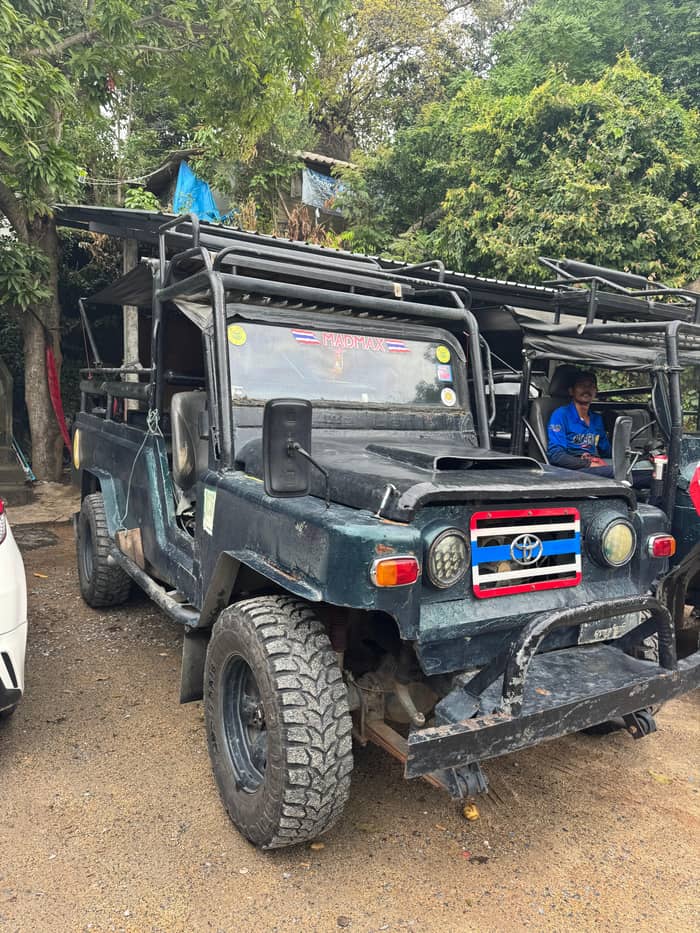
Origins
The trading island
Chinese settlers
- Look forA Guan Yu statue
- StoryHainanese settlers
- WhereNear Hua Thanon
Spot your stop
Look at 30 stops
Tap a route first, then a pin or stop, for its note and Google Maps.
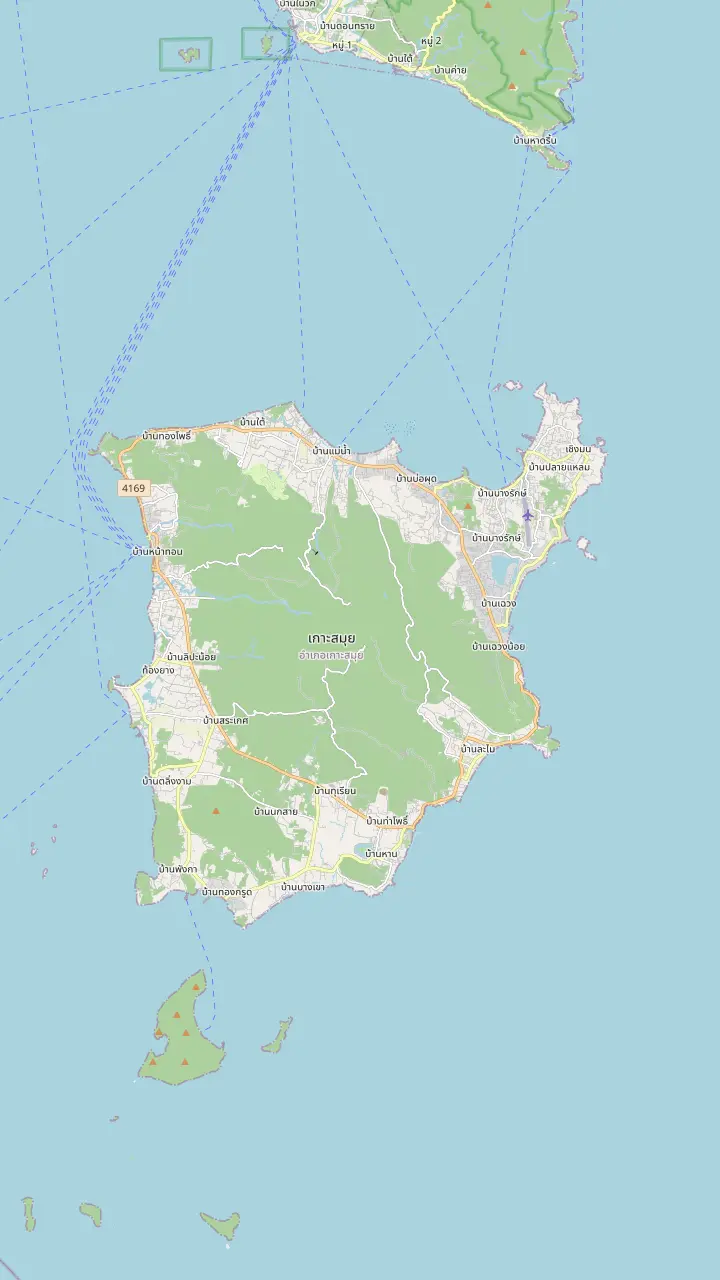
Chaweng is one of the bustling beach areas, in TAT's words, alongside Lamai.
Google MapsLamai is the other bustling beach area; the Grandpa and Grandma Rocks and the mummified monk lie just south and west of it.
Google MapsBophut is one of the more peaceful and laidback beach areas, with Mae Nam and Choeng Mon.
Google MapsChoeng Mon, on the north-east tip, is counted by TAT among the peaceful beaches.
Google MapsNathon Pier is on the west coast; the Ang Thong archipelago is a one-hour speedboat trip from here.
Google MapsSamui Airport is where Bangkok Airways flies in from Bangkok multiple times a day.
Google MapsThe Big Buddha, Wat Phra Yai, stands on Ko Fan and is reached by a causeway; the statue is 12 metres high.
Google MapsBan Hua Thanon is where the Samui Hainan Museum displays the story of the island's Chinese settlers.
Google Maps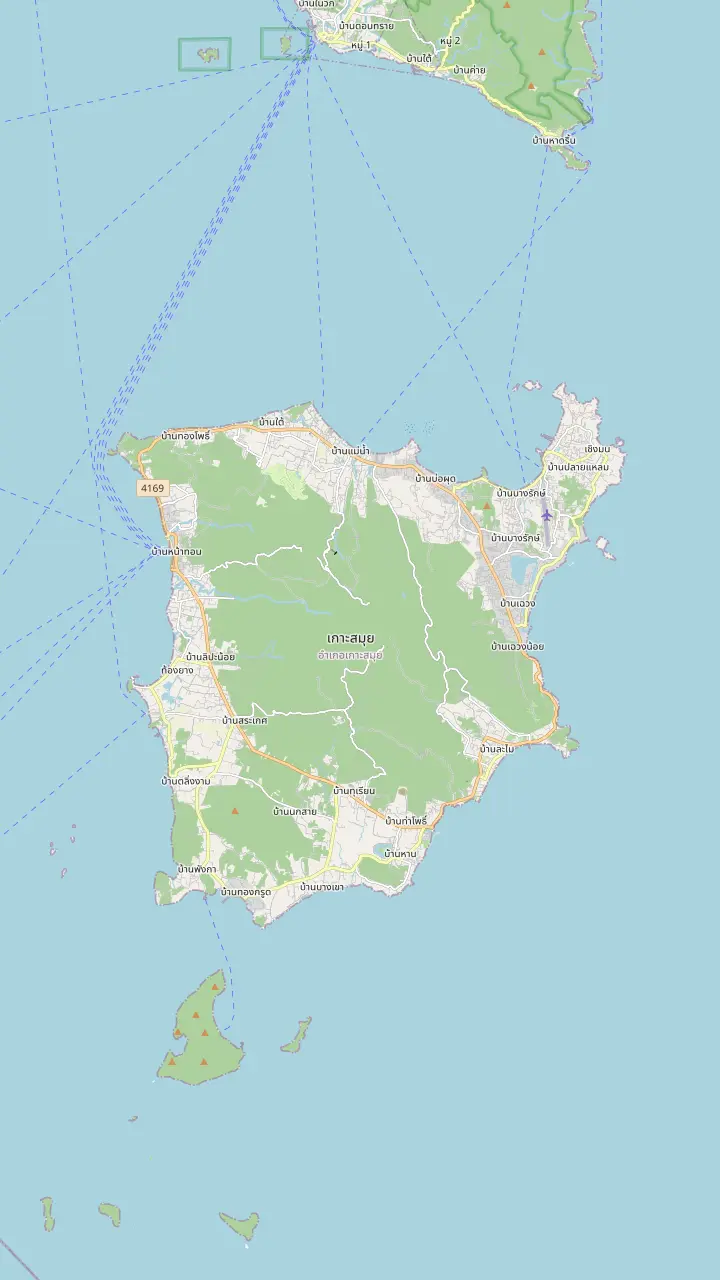
The Big Buddha, Wat Phra Yai, stands on Ko Fan and is reached by a causeway; the statue is 12 metres high.
Google MapsWat Plai Laem is a temple near Bophut with a large Guanyin statue, and a stop on the half-day temple tours.
Google MapsThe Grandpa and Grandma Rocks, Hin-Ta Hin-Yai, sit south of Lamai Beach.
Google MapsWat Khunaram holds the mummified monk, about 6 km west of Lamai Beach.
Google MapsA Chinese shrine with a Guan Yu statue, a stop on the half-day around-island tour.
Google MapsWat Sila Ngu is an atypical temple nicknamed the red temple.
Google MapsBan Hua Thanon is where the Samui Hainan Museum displays the story of the island's Chinese settlers.
Google MapsNathon Pier is on the west coast; the Ang Thong archipelago is a one-hour speedboat trip from here.
Google Maps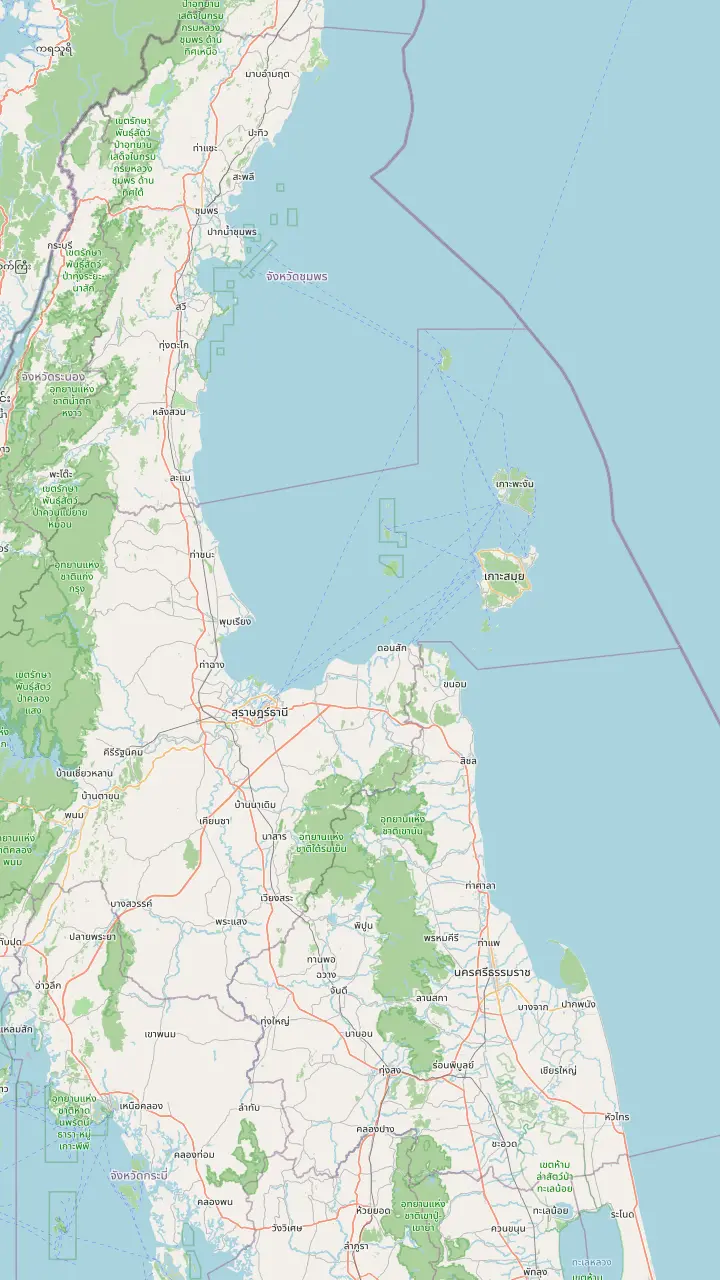
Samui Airport is where Bangkok Airways flies in from Bangkok multiple times a day.
Google MapsNathon Pier is on the west coast; the Ang Thong archipelago is a one-hour speedboat trip from here.
Google MapsBangrak Pier, on the north coast near the Big Buddha, is one of the island's ferry piers.
Google MapsA mainland ferry pier at Donsak, in Surat Thani province, for car and passenger ferries to Samui.
Google MapsA second Donsak pier on the mainland, used by another ferry operator.
Google MapsThe railway station of Surat Thani, on the mainland, from where buses and ferries continue to Samui.
Google MapsSurat Thani airport is on the mainland; from it a bus and a ferry lead on to Samui.
Google Maps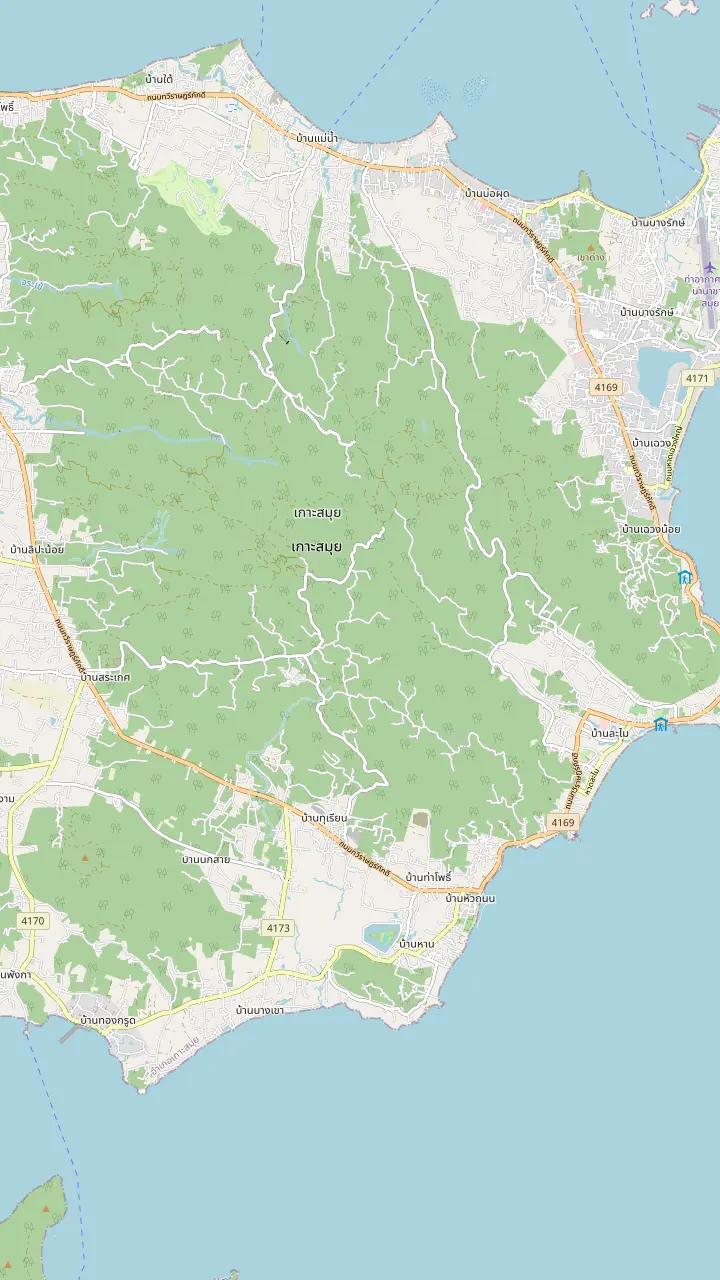
Wat Theepangkorn is built on the highest point of the island, with views over Lamai and Chaweng.
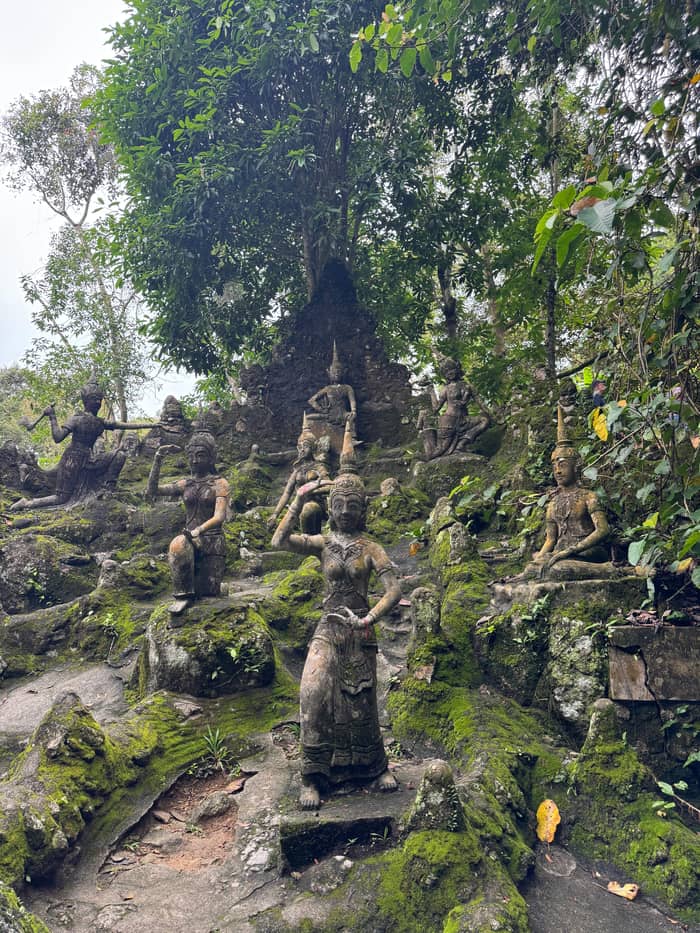
Google MapsThe Secret Buddha Garden, also called the Tarnim Magic Garden, is a private park of statues.
Google MapsNa Muang has two cascades named for the purple shade of their rock faces, about 12 km from Nathon Bay.
Google MapsHin Lat Waterfall is just over 3 km from Nathon Town, next to a small forest monastery.
Google MapsWat Khunaram holds the mummified monk, about 6 km west of Lamai Beach.
Google MapsWat Sila Ngu is an atypical temple nicknamed the red temple.
Google MapsThe Grandpa and Grandma Rocks, Hin-Ta Hin-Yai, sit south of Lamai Beach.
Google MapsMaps © OpenStreetMap contributors
Koh Samui history in one read: fishermen, traders and coconut planters, an island that took days to circle by boat, the backpackers, the airport, and the legends behind its landmarks.
Editorial team, kohsamuijeepsafari.quest · Updated November 12, 2026 · Quick read: 6 min
In brief
Samui's written history is thin, and the sources are careful to say so. A study held in the TAT tourism library, a University of Otago thesis on the island, records local folklore crediting Malay fishermen with the first settlement some 1500 years ago.1 It adds that the island was frequently visited by passing Chinese traders, which tells us the sea mattered long before the beaches did.2
The same study places the island in a wider network. In the 13th century, it says, Samui held a crucial international trading position as a commercial intermediary between China and India.7 We would not stretch that into a story about palaces or ports, because the record is general, but it explains why an island of coconut groves ended up with such mixed communities.
Today the island sits in Surat Thani, the largest province in Southern Thailand, whose archipelago of islands includes Ko Samui itself.8 TAT's picture of that archipelago adds Ko Pha-ngan, Ko Tao and the Ang Thong marine park, and Samui is the island this page follows. The rest of this page follows the island's own timeline, then the landmarks tourists see.
Heritage sites
| Landmark | Where | The story |
|---|---|---|
| Big Buddha | Ko Fan, north-east | Golden statue reached by a causeway.21,22 |
| Hin-Ta Hin-Yai | South of Lamai Beach | Rocks revered for luck and fertility.23,24 |
| Wat Khunaram | West of Lamai Beach | A monk displayed in a glass case.25,26 |
| Wat Sila Ngu | Near the south coast | An atypical temple nicknamed the red temple.27 |
| Samui Hainan Museum | Ban Hua Thanon | Displays on the island's Chinese settlers.12 |
Locations are as TAT and the Tambon records state them; check opening hours locally.25
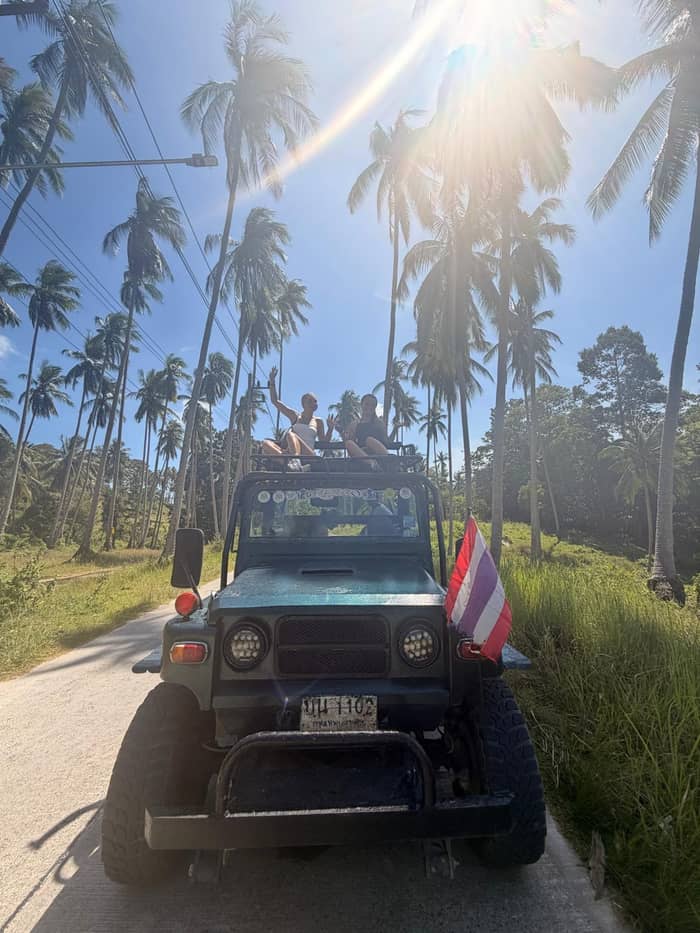
Coconuts defined the old economy. Chinese settlers, the thesis says, planted cotton and coconut on the island and built boats named Panuk Kang Si to ship the harvest to the mainland.3,9 That detail tells you how the island lived: its produce left by sea, and its link to the mainland was a boat journey, not a road.
The settlers' origin is recorded locally. The displays at the Samui Hainan Museum trace every Chinese family on Koh Samui back to Hainan.12 You can still see the legacy in the island's shrines: TAT mentions a couple of Chinese temples among Samui's temples, and a statue of Guan Yu stands at one of them.13,14
There is even a debate about the island's name. A common explanation says Chinese traders who stayed on the island called it Sow-Bouy, meaning the first gate, and the Thai pronunciation changed to Samui.15 Another says it is named after a native plant called Mui in the southern Thai language.16 Nobody can settle it from the written record, so treat both as local explanations rather than proof.
Until recent decades Samui changed slowly. The thesis says that in comparison with other areas of Thailand the island society had shown almost no physical change.29 Getting around reflected that: before the ring road, a boat trip round the coast to collect coconuts or passengers could eat up as many as three days (3 days).10
The road changed everything. A concrete ring road of 52 km, the same study says, only arrived in the early 1970s.11 Once a road joined the coast, the beaches became reachable, and the whole island, about 25 km from end to end, now feels close together.30,31
That history still colours a visit. TAT describes the interior as orchards and plantations, with small dirt roads running between coconut groves.32,33 A jeep safari travels through that working landscape, which gives a sense of the island that people lived in before the ring road made the coast easy to reach. Ask your guide about the farms you pass.
Your interest
Pick what you want to learn and see where to go.
If I want the settlers' story
Samui Hainan Museum
It displays how Chinese settlers came from Hainan.12
If I want legends
Hin-Ta Hin-Yai
Locals believe the rocks bring luck and fertility.24
If I want something strange
The mummified monk
On display since 1973 in a glass case.26
If I want a view
Wat Theepangkorn
The summit temple with a standing Buddha.28
If I want it all in a day
A guided tour
A half-day tour of 5 hours starts from $24.
Layers of the past
Origins
Chinese settlers
Folklore
Rocks and monk
Landmarks
Big Buddha and views
Tourism arrived late. The thesis places the start in the late 1970s, with the arrival of western backpackers.4 Early tourist offerings brought extra income alongside coconut growing, and early guesthouses grew beside the plantations.50
The decisive step was the airport. The airport on Koh Samui began operating in 1989, and the numbers jumped soon after.5 The records the thesis uses count 675,413 tourists in 1990, of which 319,970 were foreigners, and 697,457 in 1995.17,18 By then foreign visitors had become the larger group, and the island's economy had changed for good.
Today the island has a different reputation. Bangkok Airways operates the airport and flies from Bangkok multiple times a day, while the sea route runs via Surat Thani.34,36 TAT welcomed the island's first-place ranking in the Best Islands category at the Travel + Leisure Luxury Awards Asia Pacific 2026, which was decided by a readers' survey.51,52
Price the tours
Add your group size to price the tours that call at these sites.
Choose from 4 options
Add your group size to price the tours that call at these sites.
≈
View≈
View≈
View≈
ViewStarting prices as on the booking platform, converted at the ECB reference rate. You see the exact price at booking.
Island timeline
Earliest days
Folklore says Malay fishermen settled about 1500 years ago.1
Trading era
The island held a trading position in the 13th century.7
Plantation years
Chinese settlers planted coconuts and built boats called Panuk Kang Si.3,9
Before the road
Going around the island could take as much as 3 days by boat.10
Ring road years
A 52 km concrete ring road came in the early 1970s.11
Backpacker years
Western backpackers arrived in the late 1970s.4
Airport era
The airport began operating in 1989.5
The legends are where history meets tourism. Hin-Ta and Hin-Yai are the coastal boulders south of Lamai Beach that visitors call Grandpa and Grandma.23 TAT says a signboard near them details a local folklore legend, and that locals revere the rocks and believe they bring luck and fertility.24 The tourist jokes are easy, but the local belief is genuine.
The most striking story belongs to Wat Khunaram. Luangpho Daeng passed away in 1973, and since then his body has rested in a glass case with little sign of decay.26 Tradition holds that he set his followers a test: cremate him if the body decomposed, and display it if it did not, as a lasting lesson in the Buddha's teachings.53 For Thais, TAT adds, his life is an inspiration to follow the Buddhist precepts.54
Other landmarks tell newer stories. The Big Buddha, known locally as Wat Phra Yai, is on Ko Fan off the northeastern corner of the island and reached by a causeway.21 Its golden statue is 12 metres tall and seated in the posture of subduing Mara.22 The Secret Buddha Garden, a private park of statues, and the red temple Wat Sila Ngu are younger curiosities that fill out a heritage day.40,27
Video
Karl's Thailand on YouTube · The video stays unloaded until you press play.
the first settlement of the island was possibly by Malay fishermen about 1500 years ago
Visit with respect
What is Koh Samui known for now? Beaches first, with TAT describing a spread from bustling Chaweng and Lamai to laidback Bophut, Mae Nam and Choeng Mon.37 The mainland coast of Surat Thani lies 35 kilometres away across the Gulf of Thailand.55 Add the marine park of Ang Thong, an archipelago of 42 islands within a day trip.56
Food is becoming part of that reputation. The MICHELIN Guide Thailand announced it would cover Ko Samui and the Surat Thani mainland in its 2024 edition, and the province is famous for oysters, river prawns and salted duck eggs.57,58 Culture shows up in the festival calendar: the Samui Festival 2019 was staged for its fourth year with Nang Talung shadow puppetry and Nora dance drama.59,60
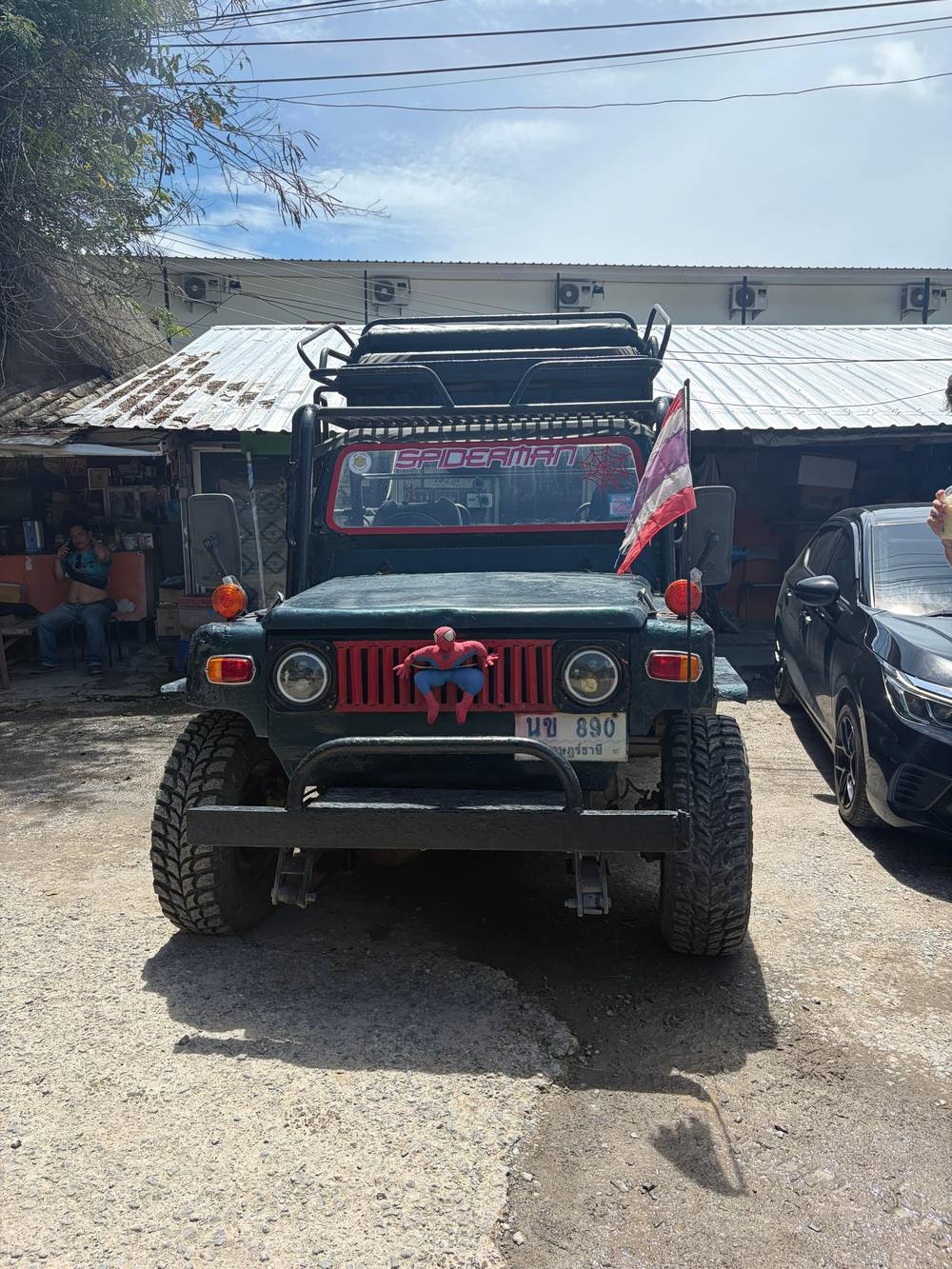
Adventure is part of the picture too. TAT lists jeep or truck safaris into the interior, ziplines and ATV trips as the way to see its mountainous and forested centre.61 The jeep safari sold on this site is one of them: a full-day outing of 6 to 7.5 hours that reaches the rocks, a waterfall, the mummified monk and the Secret Buddha Garden. It is a quick way to meet the island's legends in a single outing.
How many tourists visit Koh Samui each year? The best figures we can quote come from official counts in the thesis, which draws on the Tambon Municipality of Koh Samui and TAT. They show 675,413 tourists in 1990, 823,122 in 2000, 937,763 in 2004 and about 1.06 million in 2007.17,19,20,6 The chart below plots them.
We do not give a current annual number, because none of the official sources we use publishes one for the island alone, and a guess would be worse than silence. TAT's own statistics office is the place to look for recent arrivals. What the older series does show is the scale of change: the 2007 count is far above the 1990 count, in a place whose airport only began operating in 1989.6,17,5
Those numbers also explain the island's mixed feelings about growth. Early on, tourism was an extra income beside coconuts; today it is the main business of the island. When you choose a tour, a guide who grew up on the island is worth the same as any other local expert, because the history in this page is something that they have lived through.
FAQ
The count was about 1.06 million in 2007, from municipality and TAT records.6
The airport on Koh Samui began operating in 1989.5
He asked to be displayed if he did not decay, as a lesson in the Buddha's teachings.53
A concrete 52 km ring road was not constructed until the early 1970s.11
Sources
Related reading
Planning a jungle jeep day? Ask a real person.