Beach first
Dry months
February to April
- Rain46 to 64 mm a month
- Heat29.4 to 31.8 °C by day
- Best forBeaches and boats
Your own checklist
Checklist · 9 points
Tap items to tick them off. This device remembers your progress.
0 / 9 ready
Ready to go. All that is left is to pick the morning you want to climb into the jeep.
Save a placeIs November a good time to visit Koh Samui, or should you wait? Here are the station figures for every month, what to wear on a jeep safari and at the temples, and a short packing list.
Editorial team, kohsamuijeepsafari.quest · Updated November 12, 2026 · Quick read: 7 min
In brief
Sun for every hour is not what November offers. At the island's own station, 6.4 km from our reference point, the month delivers 452 mm of rain, falling on 15 wet days, the wettest reading of the year.1 Australia's travel advice points the same way, putting the wet season for Koh Samui and the south-east of the peninsula between October and December.2
That does not make November a write-off. The same station shows afternoon highs of 29.8 °C in the month, so the air stays warm even when the sky is grey.1 Expect heavy showers to mix with dry hours, and a quieter island for travellers who are ready to adjust plans. Keep your safari and boat days flexible, and book options with free cancellation.
British advice draws the wet season later, from November to March for Koh Samui and south-east Thailand, and warns that the pattern has become harder to predict.5,6 Because the official sources differ, the month-by-month station data is the best guide here, and you should plan for some rain whatever the month.
The chart on this page draws the station's monthly highs, lows and rain. The temperature barely moves through the year. January afternoons average 29.1 °C and nights 24.0 °C, while May reaches 32.9 °C by day.1,1 The year's lowest rain total is in April, with 46 mm.1 That narrow range is why Samui feels warm in every month and why clothing advice stays simple.
Rain is the real variable, and it changes a lot more than the heat does. February records 51 mm, March 64 mm and April 46 mm, which makes the early months the driest stretch of the year.1,1,1 From May the totals climb: 121 mm in May and 153 mm in June, with 9 wet days in June.1,1 The middle of the year is steadier than the end, with July at 111 mm and August at 152 mm.1,1
Then the year tips towards its wettest stretch. September records 129 mm, October 310 mm, November 452 mm and December 270 mm.1,1,1,1 October and November each average 15 wet days.1,1 If you read only a single line of the table, read this: the island's heavy rain belongs to the last months of the year, not to the middle, so a trip in June or July faces far less rain than a trip in November.
Month by month
Sunless hours around mid-month and the count of days with 2.5 mm or more of precipitation. NOAA, station Ko Samui (temperatures and rainfall for all 12 months), 1991 to 2020.1
Country-wide advice dates Thailand's wet season earlier than Samui's. Canada describes a rainy or monsoon season running from June to November, and Australia gives May to November for the north and centre.8,9 For Koh Samui and the south-east of the peninsula, Australia narrows the window to October to December.2
The practical meaning is simple. If you read a general Thailand guide that says the rains end in October, do not assume it applies to Samui. On this island the heaviest rain arrives later than in much of the country, and the middle months of the year can be easier than a national guide suggests. Check the station figures above instead of a countrywide season.
Health advice follows the same local calendar: for Koh Samui and the south-east, Australia flags October to December as the period when insect-borne illness breaks out most often.10 Canada adds that dengue-carrying mosquitoes bite mostly in daylight, around sunrise and sunset.11 Pack repellent for the wet months.12
Your kind of trip
Choose your priority and see which months suit it.
If I want the driest beach days
February to April
If I want a calm sea for Ang Thong
March to October
TAT says seas are calmer in that window.7
If I only care about the jeep safari
Any month
The jeep day can be cancelled free a day ahead.
If I hate heat
Avoid April and May
If I want fewer crowds and can be flexible
October to December
Which part of the year
Beach first
February to April
Balanced
May to September
Flexible plans
October to December
Nobody official publishes dates for the Koh Samui peak season in the sources we use, and we will not guess. What the station data does show is that the driest months run from February to April, the stretch with the least rain for beach days. Hotel rates rise and fall with demand, so check your own dates on the booking site before you commit.
For activities the useful feature is flexibility. Both the jeep safari sold here and the half-day temple tour can be dropped without a fee until the day before. That helps in a changeable month: reserve early for the date you want, then move it if a storm is forecast. Boat days work the same way, and TAT notes that ferries may change their timetables with the weather, so reconfirm before you travel.15
The sea keeps its own calendar. Water around the marine park is calmer from March through October, TAT says, so that is the stretch to choose for the 28 km crossing to Ang Thong.7 That window overlaps the drier months in the station data and stretches into mid-year. If a boat day matters to you, aim for it, and leave the inland safari for any month, since a jeep in the rain is part of the fun.
Price your days
Type in how many are travelling to compare the wet-weather days.
Choose from 4 options
Type in how many are travelling to compare the wet-weather days.
≈
View≈
View≈
View≈
ViewStarting prices as on the booking platform, converted at the ECB reference rate. You see the exact price at booking.
Through the year
Early months
February, March and April bring 51, 64 and 46 mm of rain.1,1,1
May and June
July and August
September
129 mm of rain on 9 wet days.1
October
310 mm of rain on 15 wet days.1
November
452 mm on 15 wet days.1
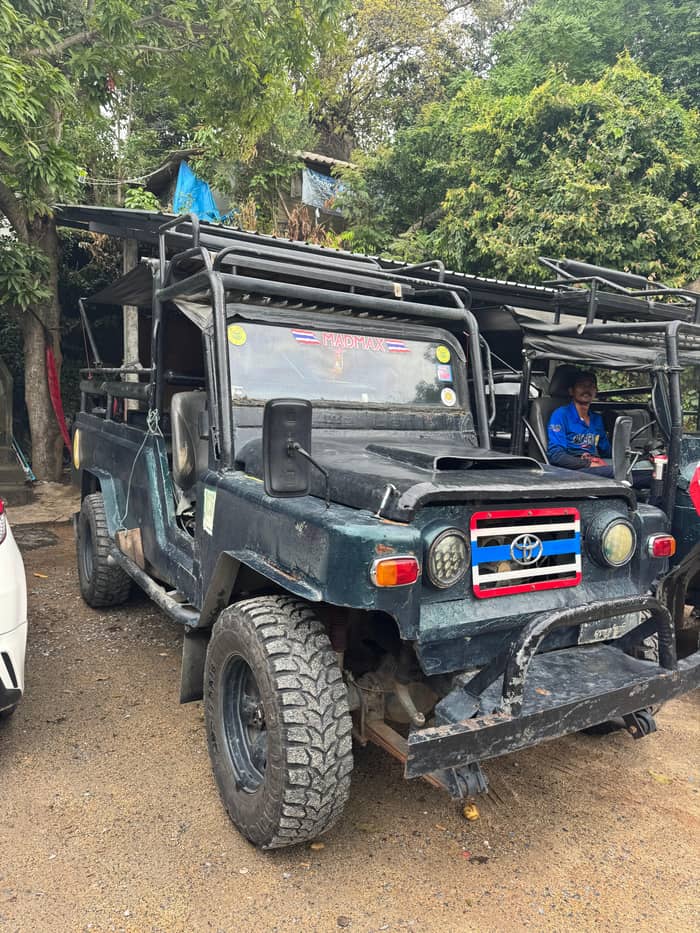
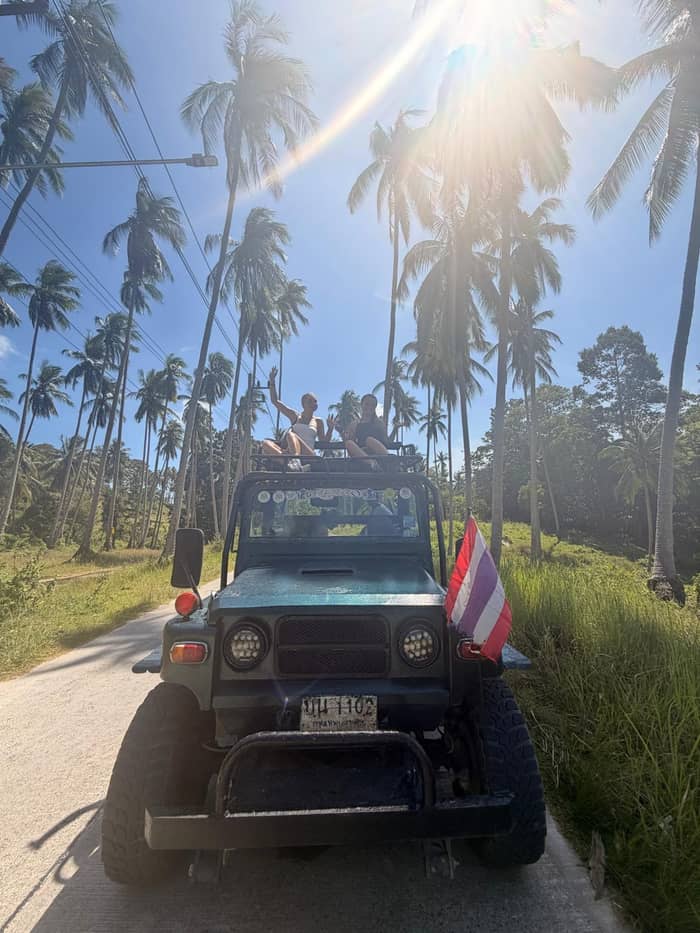
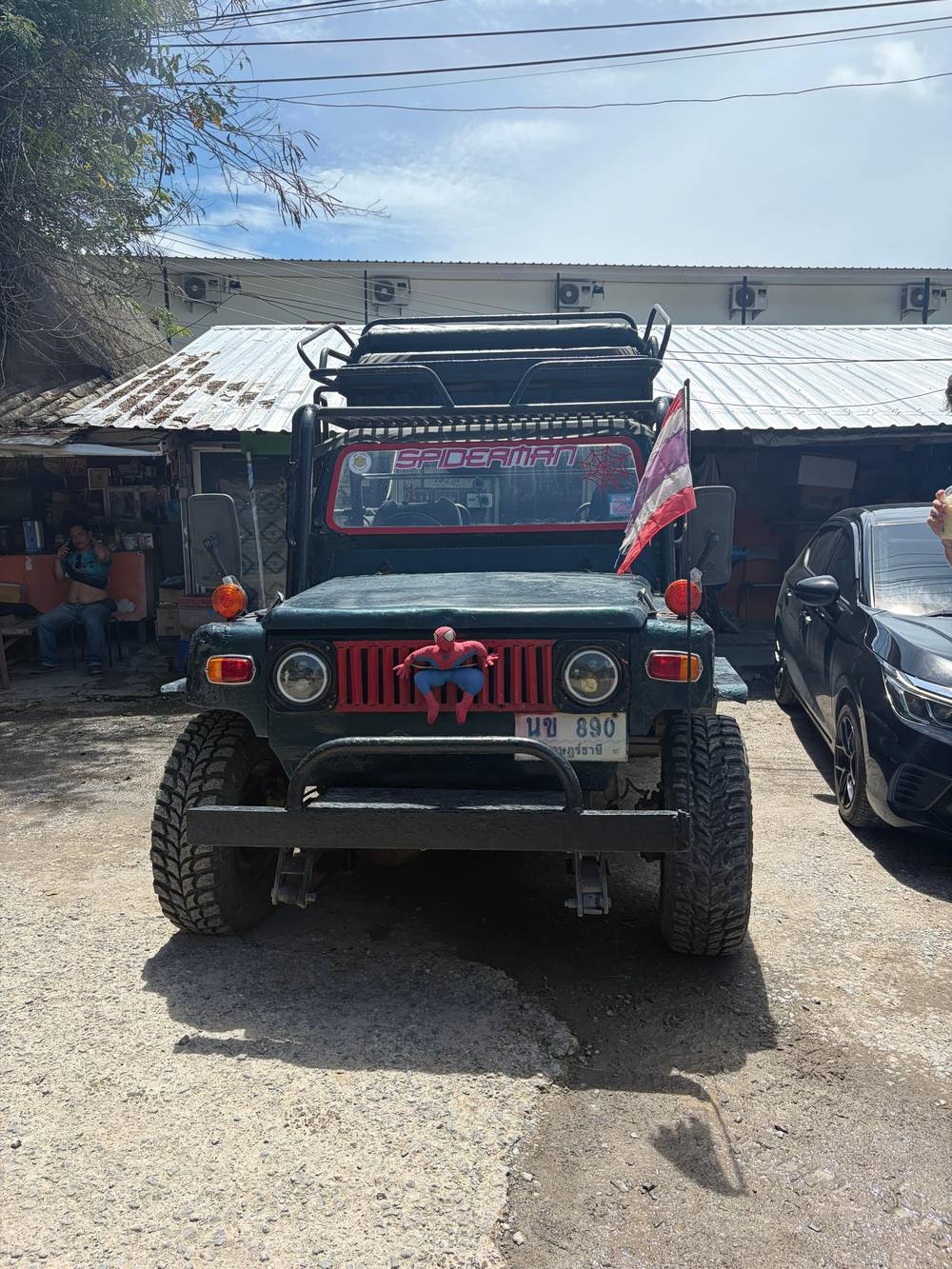
Can you do a jeep safari in the rain? Often, but expect mud. The half-day highlights operator asks guests to carry a rain cape on wet days and adds that stop order depends on the day's weather and traffic. Canada advises against jungle treks in the rainy season because mudslides are possible, and against mountain roads after dark.16,17 A guided jeep is a sensible answer, because the driver knows when a track is unsafe.
The waterfall swim needs extra care after heavy rain. Rivers and waterfall pools are riskier in the rainy season, the British government cautions, with currents that can be extremely strong.18,19 Follow your guide at Na Muang, stay in the pool areas shown to you and skip the swim if the water looks brown and fast. Missing a swim costs far less than a bad fall.
Heat is the other extreme, and it arrives before the rain does. In May the station averages 32.9 °C in the afternoon and in April 31.8 °C, so a day in an open jeep is hot in the dry months.1,1 Start early, carry water and a hat, and use sunscreen on arms and neck. The jeep safari supplies cool bottled water free of charge on the day, though other drinks cost extra.
Video
Mike Abroad on YouTube · The video stays unloaded until you press play.
In Koh Samui and the south-east of the peninsula, the wet season is usually from October to December
What to wear in Koh Samui comes down to the track and the temple. For the jeep or the quad bike, choose clothes you can get muddy, plus closed shoes. The elephant-and-jungle operator asks for comfortable clothes and closed shoes that suit walking and light jungle trails. Bring swimwear for the waterfall and a quick-dry towel.
At temples, cover up despite the heat. TAT wants sleeves and covered knees for men, and for women a sleeved top with a skirt that falls below the knee, with no thin straps.3,13 Visitors enter barefoot, so slip-on shoes help.4 Keep a light scarf in your bag to cover shoulders at the Big Buddha or at the mummified monk.
Pack a small rain layer in the wet months and sunscreen in all of them. Cotton and linen suit the climate, and a spare shirt for the ride down the mountain is welcome. If you plan a motorcycle ride, remember that helmets are mandatory for riders and passengers, although many helmets do not meet international safety standards.20 Better still, skip the scooter and go by jeep.
People also ask about the middle months of the year, so here are the numbers. June at the station averages 153 mm of rain on 9 wet days, with afternoon highs of 32.7 °C.1 September averages 129 mm on 9 wet days and 31.9 °C by day.1 Those are showery months, not drenching ones, and the totals are far below October and November.1,1
The sea is the main caution. From May to October, in the rainy season, jellyfish can come close to shore, and the British government warns that stings can be fatal.21 It also records drownings in strong riptides and asks swimmers to heed red flags.22 Ask your hotel for local advice before a mid-year swim.
The overall picture is clear enough to plan. For beach-first travellers who hate rain, February to April is the safest window in the data. For an inland-first traveller who wants a jeep safari, almost any month works, and the middle of the year often brings a good balance of dry hours and quiet roads. Treat November as the month to travel with flexibility, or to skip.
FAQ
The station records 452 mm of rain on 15 wet days in November on average.1
May afternoons average 32.9 °C at the island station.1
Canada advises against jungle treks in the rainy season because of mudslides, so follow your guide.16
The Ang Thong marine park is calmer from March to October.7
The Australian government lists October to December as the period when insect-borne illness outbreaks are common.10
Sources
Related reading
Planning a jungle jeep day? Ask a real person.